Cooling Tower Water Treatment: A Complete Guide
By the Grupo Eytra technical team · · English edition
In short
The three main problems in cooling towers, corrosion, scale and biological fouling, and how an effective chemical treatment program keeps them under control.
In this article
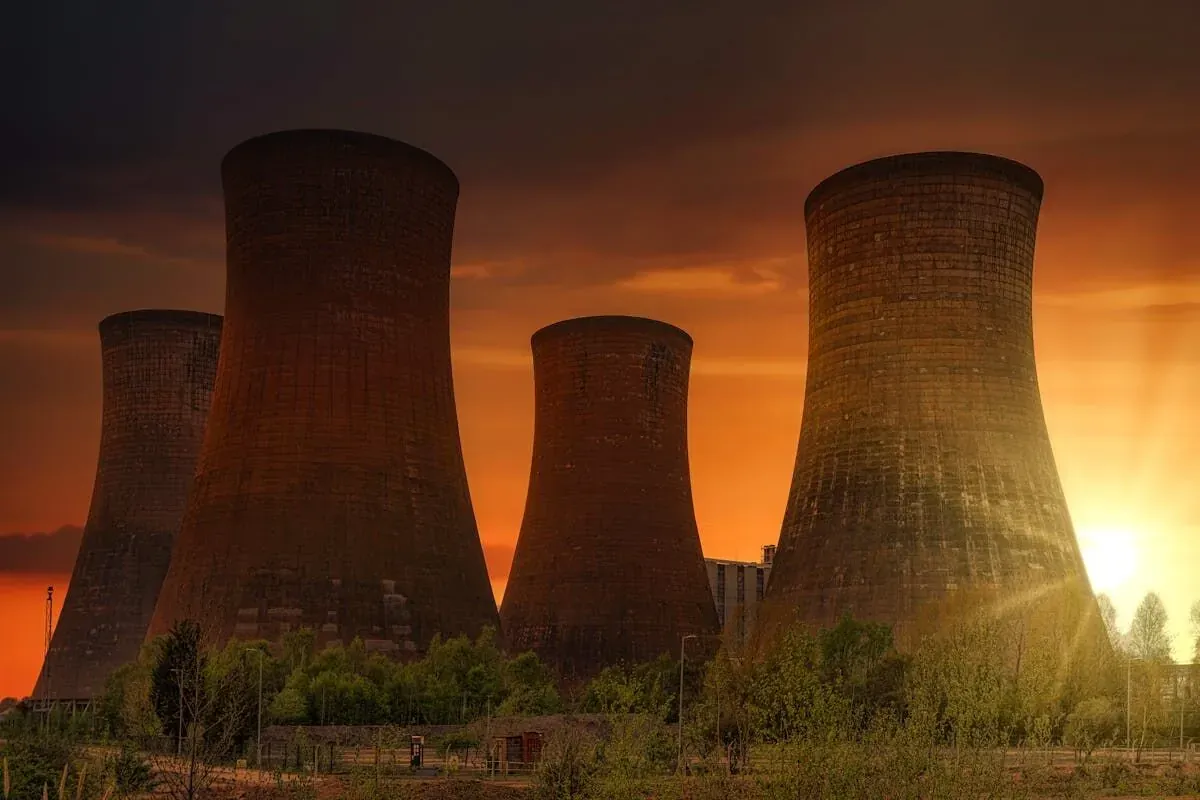
Cooling towers are critical equipment in hotels, shopping centers, industrial plants and HVAC systems. They reject the heat produced by chillers, compressors and industrial processes by evaporating a fraction of the recirculating water. That evaporation, however, concentrates the dissolved mineral salts in the water and creates conditions for three main problems: corrosion, scale and microbiological growth.
A well-designed, well-run chemical treatment program for cooling towers and boilers is the difference between an efficient, reliable system and one that suffers premature failures, high maintenance costs and health risks.
How a cooling tower works
To understand the problems, start with the process:
- Hot water from the process reaches the tower and is distributed over the fill
- A fan forces or induces airflow through the fill
- A fraction of the water evaporates (typically 1–2% of the recirculation flow), absorbing the heat
- The cooled water collects in the basin and is recirculated to the process
- Because only pure water (H₂O) evaporates, the mineral salts concentrate in the water left behind
That concentration of salts is the root of the three main problems. If the makeup water has 300 mg/L of TDS and the tower runs at 4 cycles of concentration, the recirculating water will have about 1,200 mg/L of TDS.
The three main problems
1. Corrosion
Corrosion is the electrochemical destruction of the metals in the system: carbon steel piping, copper condenser tubes, and the tower basin and structure.
Contributing factors:
- Low pH (< 7.0)
- High chlorides and sulfates (from concentration)
- Dissolved oxygen (always high in towers because of aeration)
- High temperature
- Sulfate-reducing bacteria (microbiologically influenced corrosion, MIC)
- Low flow or stagnation
Consequences:
- Perforated condenser tubes (water leaking into the refrigerant)
- Shorter equipment life
- Recirculating water contaminated with corrosion products (rust)
- Unplanned failures and high repair costs
Control parameters:
| Indicator | Acceptable range | Measurement method |
|---|---|---|
| Corrosion rate (carbon steel) | < 3 mpy (mils per year) | Corrosion coupons |
| Corrosion rate (copper) | < 0.5 mpy | Corrosion coupons |
| Dissolved iron in water | < 1.0 mg/L | Colorimetry |
| Dissolved copper in water | < 0.1 mg/L | Colorimetry |
2. Scale
Scale is the deposit of minerals on heat transfer surfaces, piping and fill. The most common type is calcium carbonate (CaCO₃), but calcium sulfate, calcium phosphate and silica can also form.
Contributing factors:
- High hardness, common on the Yucatán Peninsula: our own tests of untreated water range from 360 to 492 mg/L as CaCO₃ in the Cancún Hotel Zone (median 408), and a median of 670 mg/L in Riviera Maya wells
- High alkalinity
- High pH (> 8.5)
- High temperature on heat transfer surfaces
- High cycles of concentration
- A positive Langelier Saturation Index (LSI)
Consequences:
- Lower heat transfer efficiency: even a thin layer of calcium carbonate insulates the condenser tubes
- Higher compressor energy use
- Clogged distribution nozzles and fill
- Overpressure in recirculation pumps
Control parameters:
| Indicator | Target value | Meaning |
|---|---|---|
| Langelier Saturation Index (LSI) | −0.5 to +0.5 | Balance between scaling and corrosion |
| Calcium hardness (recirculating) | < 800 mg/L CaCO₃ | Depends on cycles of concentration |
| Silica (recirculating) | < 150 mg/L SiO₂ | Prevents silica deposits |
| Phosphate (if a phosphate inhibitor is used) | Per product | Avoids calcium phosphate deposits |
3. Biological fouling (biofilm)
The growth of microorganisms (bacteria, algae, fungi) forms a biofilm that sticks to system surfaces, especially fill, basins and condenser tubes.
Contributing factors:
- Water temperature (25–45 °C, ideal for growth)
- Nutrients (phosphates, nitrates, organic matter)
- Sunlight (promotes algae in the basin and exposed fill)
- Insufficient or poorly dosed biocide
- Dead legs and stagnant zones
Consequences:
- Lower heat transfer efficiency
- Under-deposit corrosion (MIC)
- Clogged fill and nozzles
- Risk of Legionella pneumophila growth (a health risk); see our Legionella testing page
- Odors and visual deterioration
Chemicals for each problem
A comprehensive chemical treatment program for cooling towers includes four categories of products:
Corrosion inhibitors
| Type | Mechanism | Metals protected | Typical dose |
|---|---|---|---|
| Phosphates (orthophosphate, polyphosphate) | Forms a cathodic iron phosphate film | Carbon steel | 5–15 mg/L as PO₄ |
| Molybdates | Forms an anodic film | Carbon steel, galvanized | 5–10 mg/L as MoO₄ |
| Azoles (tolyltriazole, benzotriazole) | Forms a protective complex | Copper and copper alloys | 2–5 mg/L as active azole |
| Organic film formers | Adsorption on the metal surface | Multimetal | Per product |
| Zinc | Forms a protective cathodic deposit | Carbon steel | 1–3 mg/L as Zn |
Scale inhibitors and dispersants
| Type | Mechanism | Main application |
|---|---|---|
| Phosphonates (HEDP, ATMP) | Inhibit CaCO₃ crystallization | Calcium carbonate prevention |
| Polymers (PAA, PMA) | Disperse particles and modify crystals | General deposit control |
| Sulfonated copolymers | Disperse and stabilize silica | Water with high silica |
| Phosphinocarboxylic acid (POCA) | Inhibition and dispersion | High-hardness towers |
Oxidizing biocides
| Product | Use concentration | Frequency | Advantages |
|---|---|---|---|
| Sodium hypochlorite (NaOCl) | 0.5–1.0 mg/L free chlorine | Continuous or intermittent | Economical, easy to use |
| Chlorine dioxide (ClO₂) | 0.1–0.5 mg/L | Continuous | Effective at high pH, forms no THMs |
| Bromine (NaBr + NaOCl) | 0.5–1.0 mg/L as Br₂ | Continuous or intermittent | More effective than chlorine at pH > 8 |
| Ozone (O₃) | 0.2–0.5 mg/L | Continuous | Powerful oxidant, no residues |
Non-oxidizing biocides
| Product | Use concentration | Frequency | Advantages |
|---|---|---|---|
| Glutaraldehyde | 50–150 mg/L | Weekly slug dose | Broad spectrum, fast acting |
| Isothiazolinones | 50–100 mg/L | Weekly or biweekly slug | Effective against established biofilm |
| DBNPA | 10–50 mg/L | Slug 2–3 times a week | Breaks down quickly, short half-life |
| Quaternary ammonium compounds (QAC) | 50–200 mg/L | Weekly slug dose | Surfactant, penetrates biofilm |
The best strategy is to alternate non-oxidizing biocides so microorganisms do not develop resistance, combined with an oxidizing biocide dosed continuously or semi-continuously.
Cycles of concentration: the critical balance
Cycles of concentration (COC) determine how efficiently water is used and how much risk the system runs:
| Cycles | Water savings vs. 1 cycle | Scaling risk | Corrosion risk |
|---|---|---|---|
| 2 | 50% | Low | Low |
| 3 | 67% | Moderate | Low |
| 4 | 75% | Moderate–high | Moderate |
| 5 | 80% | High | Moderate |
| 6+ | > 83% | Very high | High |
With makeup water at 408 mg/L of total hardness as CaCO₃ (the median of our tests of untreated water in the Cancún Hotel Zone), running at 4 cycles would mean about 1,632 mg/L as CaCO₃ in the recirculating water, which calls for a robust scale inhibitor program. Most systems in the area run best at 3–4 cycles of concentration.
Blowdown needed to hold the target cycles:
Blowdown (L/min) = Evaporation (L/min) / (COC − 1)
Monitoring the key parameters
A chemical treatment program needs regular monitoring to adjust the doses:
| Parameter | Frequency | Method | Target |
|---|---|---|---|
| pH | Daily | Digital meter | 7.0–8.5 |
| Conductivity / TDS | Daily | Conductivity meter | Per target COC |
| Free chlorine or bromine | Daily | DPD colorimetric | 0.3–1.0 mg/L |
| Calcium hardness | 2–3 times a week | EDTA titration | COC × makeup hardness |
| Alkalinity | Weekly | Titration | Per COC |
| Dissolved iron | Weekly | Colorimetry | < 1.0 mg/L |
| Dissolved copper | Weekly | Colorimetry | < 0.1 mg/L |
| Phosphate (if used) | 2–3 times a week | Colorimetry | Per program |
| Langelier Saturation Index | Weekly | Calculation | −0.5 to +0.5 |
| Bacteria count (dip slides) | Weekly | Dip slide | < 10⁴ CFU/mL |
| Legionella (if applicable) | Quarterly | External laboratory | < 1,000 CFU/L |
Recommended treatment program
A complete program for cooling towers in Cancún and the Riviera Maya typically includes:
- Multimetal corrosion inhibitor: protection for carbon steel and the copper in the condenser.
- Scale inhibitor and dispersant: formulated for high-hardness water.
- Oxidizing biocide: sodium hypochlorite or bromine, dosed continuously with ORP control.
- Non-oxidizing biocide: a weekly slug dose, alternating products.
- Automatic blowdown control: based on conductivity, to hold the optimal cycles.
- Corrosion coupons: for monthly monitoring of the corrosion rate.
- Laboratory monitoring: weekly testing of the control parameters.
Dosing: fixed-rate vs. proportional
| Method | Description | Advantages | Drawbacks |
|---|---|---|---|
| Fixed-rate (metering pump at constant rate) | Constant injection in mL/min | Simple, economical | Does not follow load changes |
| Proportional to makeup flow | Injection in proportion to incoming water | Better residual control | Needs a flow meter |
| ORP control (oxidizing biocide) | Automatic dosing based on ORP | Precise disinfection control | Needs a controller and probe |
| Conductivity control (blowdown) | Automatic blowdown at the target TDS | Optimizes water and chemical use | Needs a controller |
Combining flow-proportional dosing for inhibitors with ORP control for the oxidizing biocide is best practice for medium and large systems.
The cost of treating vs. not treating
| Item | With treatment | Without treatment |
|---|---|---|
| Monthly chemical cost | A fixed, budgeted line item | None |
| Chiller efficiency | Close to design | Lower, as scale builds up |
| Energy use | As designed | Higher every month the scale stays |
| Condenser life | As specified by the maker | Shortened by corrosion and scale |
| Condenser retubing | Not needed | A major capital expense |
| Legionella risk | Controlled | High |
Scale and corrosion carry energy and repair costs that a treatment program is designed to avoid.
Optimize the treatment of your cooling towers
At Grupo Eytra we design and run chemical treatment programs for the water conditions of the Yucatán Peninsula. The service includes the chemicals, weekly monitoring, corrosion coupons and monthly performance reports.